Memory Keeping for Twins: A Fair and Simple Approach
Baby Milestone Journal ·
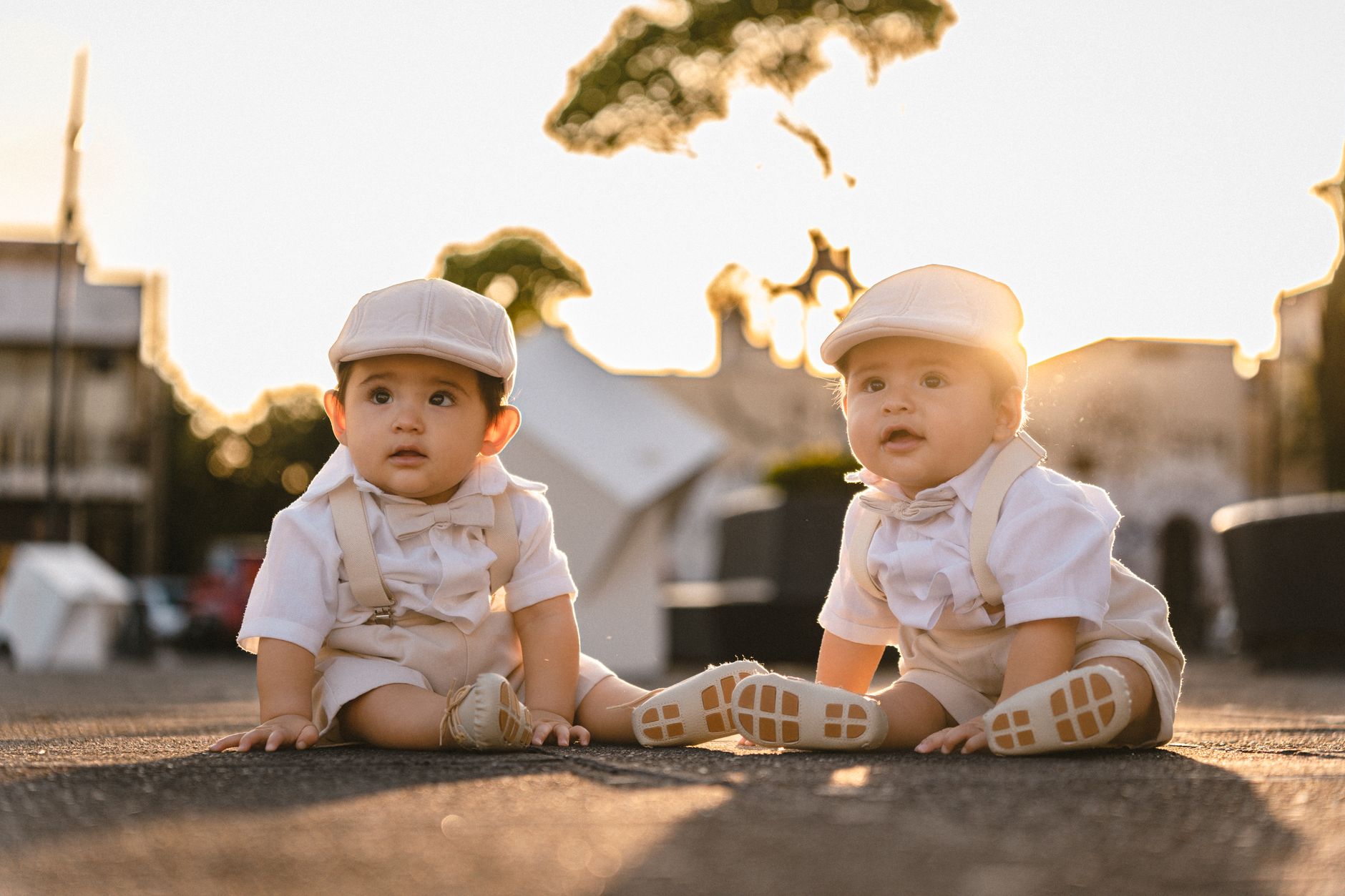
Memory keeping for twins brings a particular kind of pressure. You're not just trying to remember one baby's first smile or first steps—you're trying to notice, capture, and preserve two separate little lives that are unfolding at the same time, often in the same breath. Parents of twins frequently tell us they worry about favoritism by accident: one baby's funny faces got photographed more simply because they happened to be awake when the camera was out. This article isn't about doing twice the work. It's about building a light, reminder-driven rhythm that lets both of your children's stories come through clearly, even on the weeks when you can barely keep track of whose nap is whose.
Why Twin Memories Get Lopsided Without Meaning To
It rarely happens on purpose. One twin is a bit more vocal, more mobile, or simply more often in the right place when you reach for your phone. Over weeks and months, that small imbalance compounds. You look back after six months and notice you have thirty photos of one baby's expressions and a handful of the other, mostly asleep or mid-cry.
This isn't a reflection of love or attention in the moment—it's a reflection of how memory keeping naturally drifts toward whoever is easiest to capture. Recognizing this pattern early is the first step to correcting it gently, without turning memory keeping into a scorekeeping exercise. The goal isn't perfect fifty-fifty symmetry. It's making sure neither child's story goes quiet by accident.
A simple awareness check works well: once a week, scroll back through your saved notes or photos and ask yourself whose moments you have more of. You don't need to fix an imbalance instantly. Just noticing it keeps you from going a whole season without a single note about one twin's personality emerging.
Using Reminders to Capture Both Stories Evenly
A reminder system is especially useful with twins because it takes the decision-making out of busy moments. Instead of relying on memory or guilt to prompt you, a gentle nudge—twice a week, say—can simply ask: what did each twin do today that felt like them?
Some families set up two parallel reminders, one per child, spaced a day apart, so each twin gets a dedicated moment of attention rather than being lumped into a single joint note. Others prefer a single reminder that explicitly asks for one line about each baby, which keeps the habit light while still ensuring neither gets skipped.
What matters most is that the reminder asks a specific question rather than a vague one. 'Write something about the twins' tends to produce whichever twin comes to mind first. 'What did each of them do today that was only theirs?' pushes you to actually distinguish them, which is often where the richest, most individual memories come from. Over time, these small distinctions—the way one twin hums while eating, the way the other studies new toys silently—become the details you treasure most.
Noticing Individual Personality Inside a Shared Story
Twins share a birthday, a nursery, maybe even a feeding schedule, but they rarely share a personality. Memory keeping for twins works best when it leans into those differences rather than smoothing them into one combined narrative. Instead of writing 'the twins loved bath time today,' try noting that one twin kicked and laughed while the other watched quietly, gripping the edge of the tub.
These small contrasts are exactly what you'll want later—not just to remember what happened, but to remember who each child was becoming. Caregivers and grandparents often naturally compare twins, and a journal that captures individuality gently pushes back against flattening them into a matched set.
It also helps to occasionally write a note that's entirely about one twin alone, with no mention of their sibling. This can feel unnatural at first, especially if your days are structured around doing everything in pairs, but it gives each child a thread of memory that is unmistakably their own, separate from being 'one of the twins.'
Building a Rhythm That Works for Real Twin Life
Twin households run on tighter margins than most. There's less time between tasks, less room for lingering over a single memory before the next need arises. A memory keeping rhythm for twins has to respect that reality rather than add another layer of obligation.
Keep the system small: a few words per child, a couple of times a week, is enough to build a meaningful record over a year. Resist the urge to make it even and perfectly balanced every single week—some weeks one twin will simply have more going on, and that's fine as long as the pattern evens out over months rather than days.
If you're using a reminder-based journal, consider setting the prompts around moments that naturally involve noticing both children, like mealtimes or bedtime, rather than trying to carve out separate windows you don't actually have. The goal is a rhythm that fits the chaos of twin life, not one that asks you to rise above it.