One-Line Baby Memory Notes
Baby Milestone Journal ·
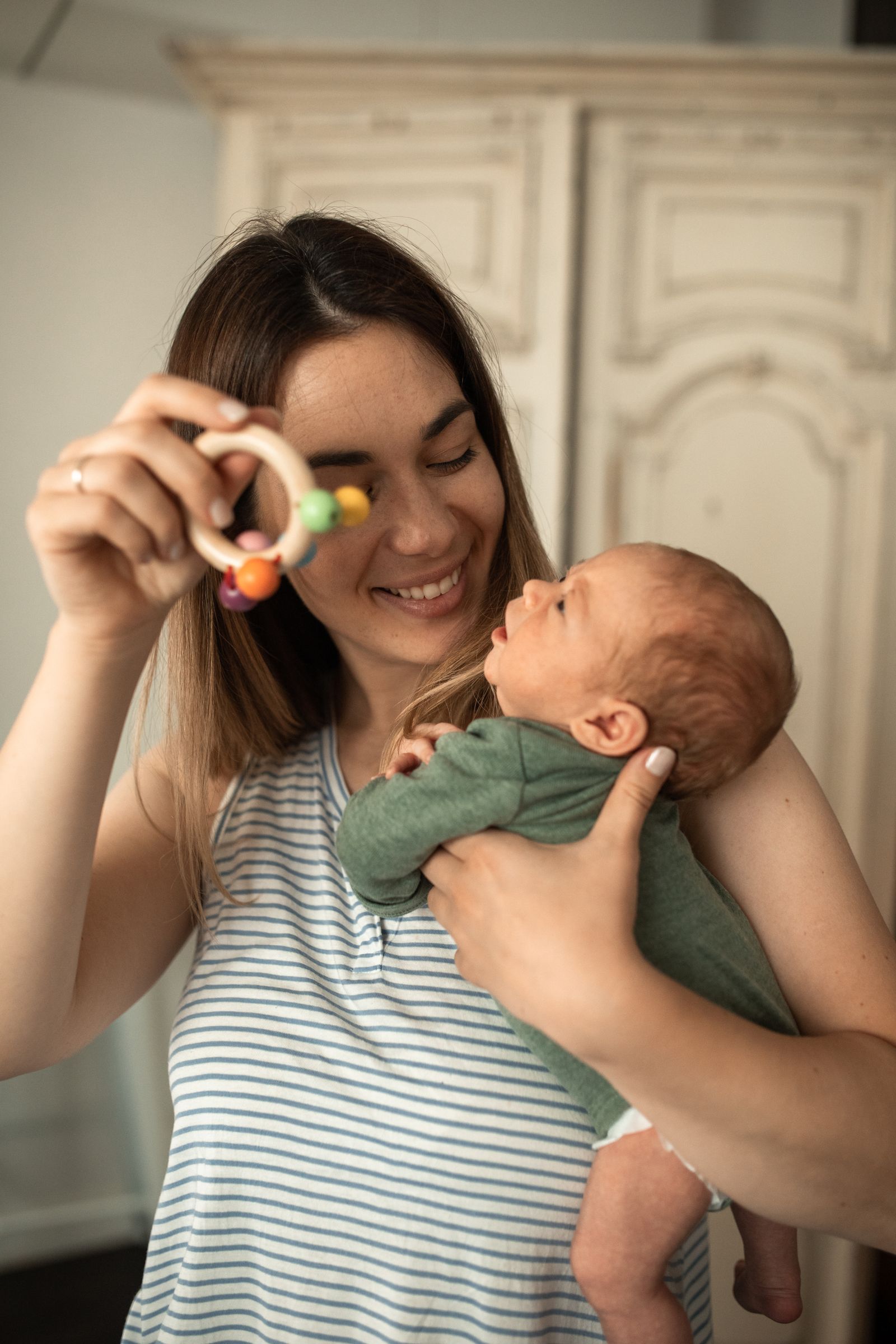
There is a version of baby journaling that assumes you have evenings. Quiet ones, with tea, where you reflect on the week and write thoughtful paragraphs in good handwriting.
If you currently have evenings like that, wonderful. This article is for everyone else: the parents typing with one thumb while a baby sleeps on their chest, who still want this year saved somewhere.
The method is called the one-line note, and it is exactly what it sounds like. One sentence. A date. Done.
Why one line is enough
A memory note does not need to describe a moment completely. It needs to bring the moment back. Those are very different jobs, and the second one is much smaller.
"She discovered her feet today and was amazed" is eleven words. Read it in five years and the whole scene returns: the play mat, the expression, the era of your life when feet were breaking news. The sentence is not the memory. It is the key to the memory, and keys are small.
This is why one honest line beats an unwritten paragraph every single time. The paragraph you meant to write saves nothing.
What to write when your mind is blank
Exhaustion makes every question feel like an essay prompt. So keep a tiny menu of fill-in-the-blank starters:
- Today you ______ for the first time.
- Right now your favorite thing is ______.
- The sound you make when ______ is my favorite.
- This week was hard because ______, and sweet because ______.
- I do not want to forget ______.
Pick one, fill the blank, stop. If even that feels heavy, write a note of pure fact: "Two naps, one blowout, first time laughing at the cat." Facts with dates become stories on their own.
Write it where it will survive
A one-line note only works if it lands somewhere findable. Sentences scattered across your notes app, random texts to your partner, and the backs of envelopes are memories in witness protection. They exist, but no one will ever see them again.
The note needs a home that sorts itself. A baby journal app that supports written memory notes attaches each line to a date and your baby's age automatically, so "she discovered her feet" files itself into the four-month chapter without any effort from you. Months later, the lines read in order like a story you did not realize you were writing.
Let reminders carry the schedule
The hardest part of any tiny habit is remembering it exists. Tired brains do not hold schedules; they hold babies.
This is the one place to outsource. An age-based reminder that taps you on the shoulder once or twice a week turns the one-line note from a discipline into a response. The reminder arrives, you write a sentence about whatever is in front of you, and you are finished before the kettle boils.
If a reminder catches you at an impossible moment, skipping it costs nothing. The next one comes, and the journal continues. A record with gaps is still a record. A journal abandoned out of guilt is not.
Attach the line to a photo when you can
Photos and one-liners are stronger together. The photo shows what the moment looked like. The sentence holds what the photo cannot: the joke, the smell of the moment, the way you felt watching it.
You are probably taking photos anyway. When one stands out, add a line to it: "He held the spoon himself and was unbearably proud." Ten extra seconds, and the photo gains a voice. Milestone entries work the same way, a photo plus a note plus a date, whether the milestone is official or one only your family would count.
Lower the quality bar on purpose
Some of your lines will be flat. "Long day. She is teething maybe. We survived." Write them anyway.
First, because flat days are part of the true story, and the true story is what you are keeping. Second, because the flat lines make the bright ones shine. A journal of nonstop wonder reads like a brochure. A journal with tired Tuesdays in it reads like a life.
One caution worth naming: your notes are memories, not measurements. If something in the pattern of your days worries you, about feeding, sleep, or how your baby is growing and changing, bring it to your pediatrician. The journal keeps the story; your baby's doctor answers the questions.
A realistic rhythm
Here is the whole system, sized for your actual life. Two or three reminders a week. One sentence each time, sometimes attached to a photo. A skipped week now and then, forgiven instantly.
That modest rhythm produces something remarkable: a hundred-plus honest sentences a year, in order, in your own voice. No scrapbook weekend required. No backlog. No guilt.
Start with tonight's sentence
Do not start tomorrow. Tomorrow is where journals go to stay imaginary. Sometime today, write one line about this exact stretch of days: what your baby is obsessed with, what is hard right now, the small thing you want to keep.
That single sentence is a complete beginning. The tired version of you who writes it tonight is the author your child will someday be most moved by, precisely because the lines were written one-handed, in the dark, by someone who showed up anyway.